You have no items in your shopping cart.
- New UserRegister now and make the most of My Account.
- Register
Search
By Mahnum Najaf Sayal
A strategic approach to testing, building and sustaining audiences and demand across global markets.
In fashion, timing is everything - but so is geography. Before a market matures, it must first be understood. Before it can be owned, it must be built. This is the space Meraki has chosen to operate in - not as a participant, but as an early mover.
While global attention remains fixed on legacy fashion capitals and established circuits, where competition for visibility is already saturated, a quieter shift is underway across emerging markets, where demand is still taking shape and audiences are yet to be fully defined. It is within this evolving landscape that Meraki has positioned itself. Its strategy is less about visibility and more about timing - entering regions before demand peaks, returning before competitors arrive, and building a presence where the landscape is still open. Because this is not simply about participating in a market or reaching new audiences - it is about positioning itself to define and shape them. Not just for itself, but for every designer it represents.
With exhibitions spanning London, Manchester, Doha, Singapore and Bangladesh, the platform’s expansion reflects more than global ambition. Its repeated return to Dhaka, where Meraki prepares for its third showcase, signals something more strategic: a long-term investment in markets that are not yet saturated, but increasingly receptive to South Asian fashion.
This response is reflected in the complete sell-out of its previous two showcases - the first in October last year, and the second in January this year.
What distinguishes a returning market from a new one is not just familiarity, but intent. A third visit in May, in this context, is not repetition - it is continuity. It reflects a level of response that justifies return, and an internal confidence that enables sharper, more assured decision-making.
For Meraki, Dhaka has moved beyond experimentation, emerging as a market of strategic focus.
This shift is underpinned by a gradual but clear evolution across each engagement. The first entry was defined by discovery - an exercise in understanding the landscape, observing consumer behaviour and identifying the nuances that shape demand. The second brought validation, confirming alignment between product and audience, and establishing a clearer sense of what resonates.
By the third, the approach has entered a phase of consolidation, where decisions are no longer reactive but informed by accumulated insight. Patterns that once required decoding are now recognisable, enabling greater precision in both curation and execution.
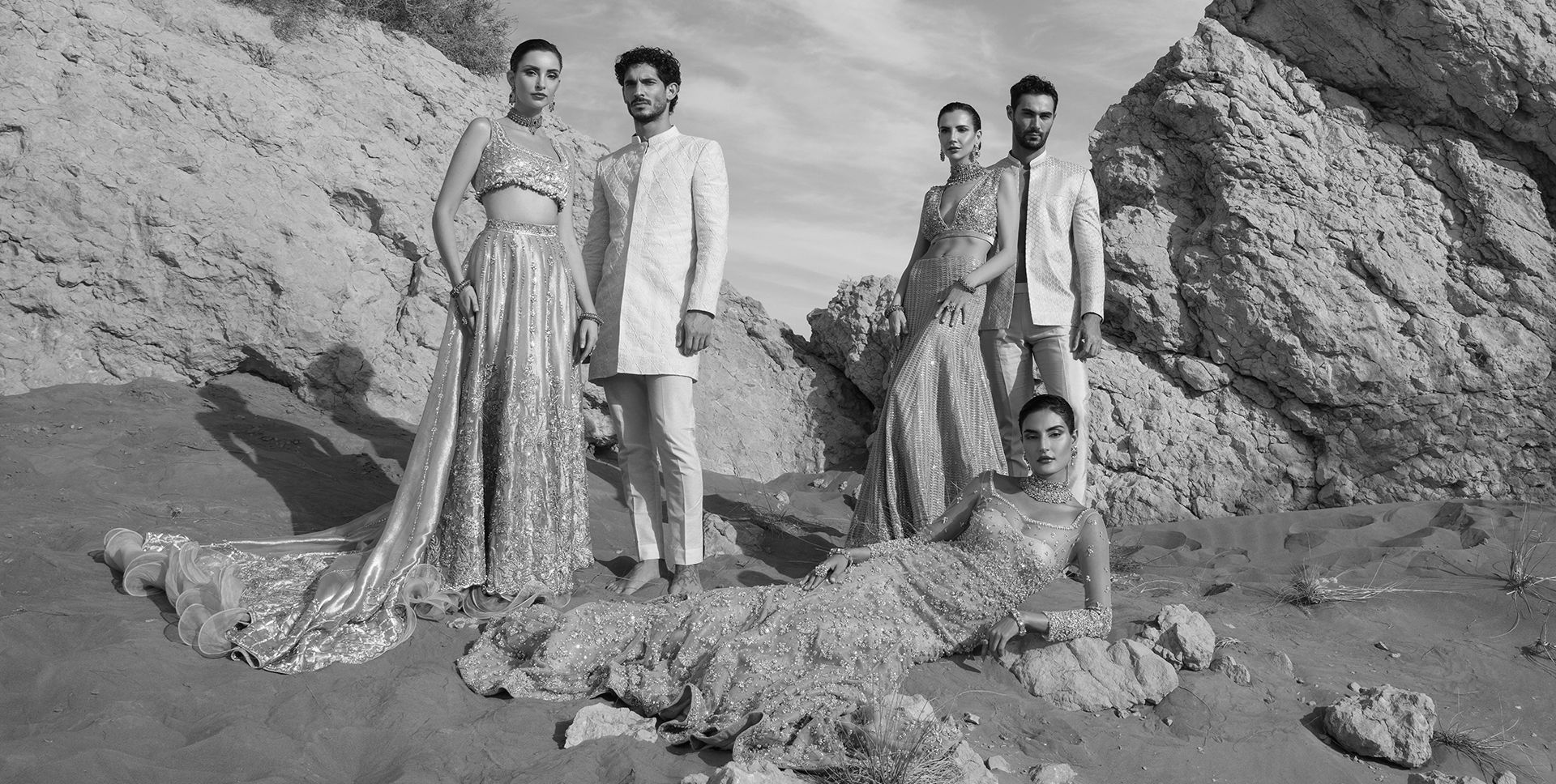
The upcoming showcase at The Westin Dhaka on 2nd May encapsulates this maturity. The curation reflects both continuity and progression, bringing together a mix of established names and new introductions.
Nia Mia marks a first-time presence on the platform, while returning designers such as Farah Talib Aziz, Ansab Jahangir, Sehrish Rehan and Aisha Imran reinforce consistency and brand recall. They are joined by IQA, Deepak Perwani, Indian designers Sameer Patel and Kashmira, and Libasse, a Bangladeshi fashion label, alongside Hamna Amir as the platform’s sole jewellery designer.
Together, the line-up reflects not just diversity in design, but a considered response to what the market has come to recognise and seek.
Within this framework, the trajectory is clear. Bangladesh presents a particularly compelling landscape. Beyond its longstanding role as a manufacturing hub, the country is demonstrating the characteristics of a responsive and evolving consumer market.
A strong mid-market appetite is increasingly evident, supported by a digitally aware yet culturally grounded audience. There is a growing responsiveness to design-led fashion that balances aspiration with accessibility.
Equally critical is the cultural calibration that underpins this approach. A clearer understanding of festive cycles and seasonal demand now informs both timing and assortment. Preferences in colour, styling and aesthetic are no longer treated broadly, but with nuance. Messaging has similarly evolved - moving away from generic narratives towards communication that feels local, contextual and considered. The focus is no longer on presenting South Asian fashion to a market, but on situating it within the cultural rhythm of that market. In doing so, Meraki is not designing around the consumer - it is designing with them in mind.
In this context, Dhaka is no longer an emerging checkpoint but a strategic market in formation. With each return, Meraki has moved closer to understanding not just what resonates, but why. Purchasing behaviour is no longer being decoded - it is anticipated. Decision-making has become faster, sharper and increasingly precise, shaped by patterns that are now clearly visible.
This evolving understanding is also reflected in how the platform positions itself. The shift is subtle but significant - from entering a market to building within it. From testing to refining, and now to scaling. Presence alone has begun to generate recall, often preceding communication. The brand no longer introduces itself; it arrives with a degree of familiarity already in place. This is where market-building transitions into market consolidation - not through dominance, but through consistency, repetition and trust.
In this, Meraki’s approach becomes increasingly defined. It is not merely tapping into global markets - it is studying them, returning to them and, over time, embedding itself within them. The objective is not short-term visibility, but long-term relevance. Because building a market is not about being first - it is about staying long enough to matter.
Sign up now to get your brand listed on the largest eastern designer wear platform.



Take a screenshot, call/WhatsApp us at
+(971) 56 224 4288
or email at
[email protected]