You have no items in your shopping cart.
- New UserRegister now and make the most of My Account.
- Register
Search
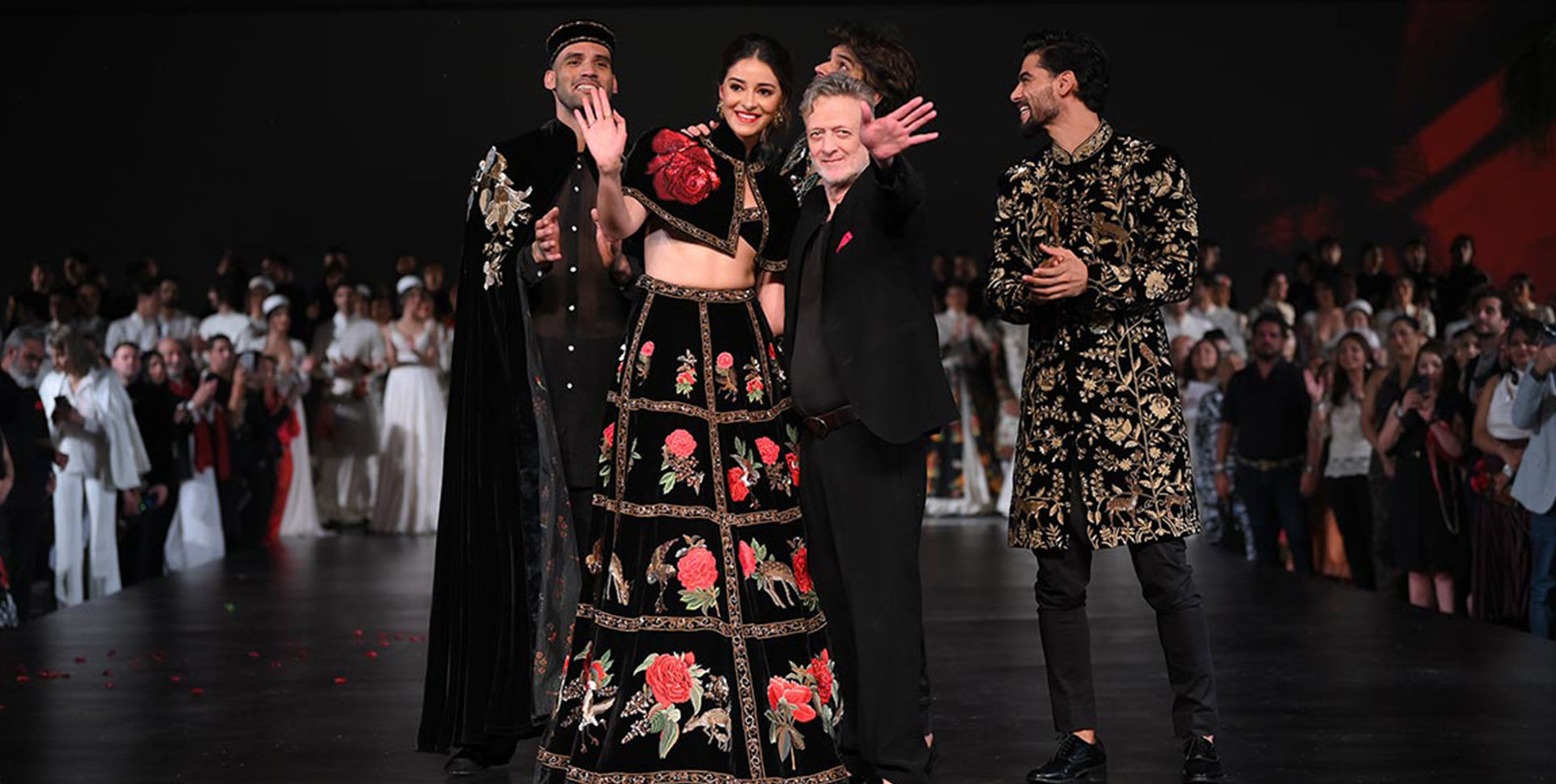
Some personalities leave a mark - an imprint that becomes etched onto one’s soul. Such was the persona of Rohit Bal. Zurain Imam offers a heartfelt tribute to the unforgettable Gudda of India’s fashion industry.
A true pioneer of Indian fashion and an inspirational figure for aspiring designers during the transformative 1990s, Rohit Bal was celebrated as a “Master of Fabrics and Fantasy” by Time magazine and hailed as the John Galliano of India, universally praised for his aesthetic refinement and the handcrafted opulence he imbued into both Indian women’s wear and menswear that defined his career.
Bal passed away in New Delhi on November 1, 2024, at the age of 63 from a cardiac-related issue.
To everyone who was close to Bal, he was known as "Gudda" (male doll in Hindi).
That, in many ways, is a rather apt nickname for Bal. If fashion stands for fun, frolic, and fantasy, Bal singlehandedly was responsible for bringing joie de vivre into Indian fashion.
I was fortunate to briefly encounter Bal’s effervescent persona in September 2006 while reporting on the Lux Carnival de Couture, a high-profile annual fundraising gala for the Teacher’s Resource Centre organized by Zeba Hussain, CEO of Ensemble multi-brand boutique, that had also invited other Indian designers, including Tarun Tahiliani and Manish Malhotra, to Pakistan, along with superstars such as Shilpa Shetty, Arjun Rampal, and Urmila Matondkar. Bal's presence at the event was a testament to his commitment to promoting cross-cultural exchange and understanding through fashion.
I remember Bal excitedly accompanying me to an after-party at a private club until I introduced him to Pakistani pop star Ali Zafar, whereby he completely forgot about my existence and went off with Zafar. I suppose Bal preferred the company of a music icon rather than a boring journalist!
At the event, Bal had showcased his F/W 2005 ‘Sheen Mubarak’ (the Kashmiri announcement to celebrate the first snowfall) collection that was a stunning ode to purity. It featured all ivory full skirts, cholis, empire-line long tops, Nehru-collared jackets, and capes generously embellished with gold accents.
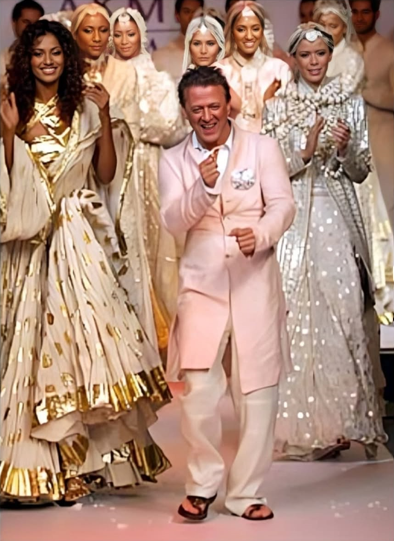
Image Courtesy - Rohit Bal
The collection saw Bal reviving the age-old Warak ka Kaam (silver/gold leaf) and Sacha Gota (trimmings made of precious metals) once used by royalty. Crescent-shaped embroidered and printed Chaand Boota motifs, once viewed by Bal on a 15th-century Mughal jacket displayed at the Smithsonian, were also a major leitmotif.
Bal was known for his signature use of gold peacock, lotus, and paisley motifs in particular (that remained essentially unchanged throughout his career) alongside the intricate Kasab embroidery of Kashmir, often posited on his favourite fabric, muslin, which had his heart.
“I love everything organic,” Bal once explained. “I have been in love with a fabric called 'muslin' or mulmul, and I've used it consistently since I can remember. The natural tinge of muslin is ivory, and if I had my way, I wouldn't look at any other fabric other than muslin,” he told India Today in 2016.
“The humility of the lotus that blooms in swamps and the vanity of the peacock have been the two incredibly spectacular opposite forms I have been attracted to all my life," Bal told Mint in an interview in 2014. They defined his design language, just like his penchant for using heavy velvets and brocades in elaborate designs inspired by Indian royalty. Bal’s designs exemplified his dedication to rich cultural aesthetics.
He experimented with traditional silhouettes like the anarkali, angrakha, sharara, and lehenga, with an added touch of contemporary appeal. The designer also used Western pattern-cutting techniques for regal Indian wear.
Black and ivory often served as his canvas, brought to life with his signature pops of red, delicate zardosi work, and layered intricacies. Ivory, in particular, was his favourite colour to work with.
Bal's designs redefined luxury fashion in India. His designs catered to the growing demand for high-end fashion in India and set a new standard for luxury fashion in the country.
And of course, Kashmir was always extremely close to Bal’s heart.
The youngest of five children (he has two brothers, two sisters), Rohit Bal was born on May 8, 1961, in the city of Srinagar, in the Kashmir Valley of the Indian “paradise” state of Jammu and Kashmir, into a Kashmiri Pandit family.
“My childhood was heavenly,” Bal once glowed. “My family owned most of the land in Kashmir, and my life was filled with great luxury. All around me was incredible beauty, splendid mountains, fields full of blooming daffodils - it was a fairy-tale."
Bal received his education from Woodlands House School and Burn Hall School in Srinagar, until his family was forced to leave Kashmir in the 1970s due to the Islamist-Separatist Insurgency.
His family settled in New Delhi, where he completed his education at the Delhi Public School in Mathura Road. He later graduated with a first-class Bachelor's degree in History from the elite St. Stephen's College of the University of Delhi. He studied fashion through a short course at the National Institute of Fashion Technology and also later taught students at the institute as guest faculty.
Bal began his career with his brother Rajiv Bal in New Delhi in 1986 at the company Orchid Overseas Pvt. Ltd, and eventually launched his eponymous fashion label in 1990, starting with a traditional menswear collection.
Bal immediately elevated Indian fashion to exalted pedestals and gave it a refreshing everyman perspective.
“It was in making fashion every day, and elite at the same time, which was the key to his success,” opined Indian fashion historian Hindol Sengupta, whose fashion tome Indian Fashion featured Bal and other leading fashion visionaries.
“Bal was the first Indian designer who understood the connection between revelry and fashion. He realised that it was in the clubs and pubs, discotheques, lounges, and even private parties that trends were born and died. Bal’s genius was his ability to connect the hip with heritage,” Sengupta further explained.
Bal also pushed sartorial barriers when he made his male models wear sindoor (vermilion) – a quintessential traditional Indian, feminine symbol of marriage – or created a very successful collection of skirts for men. Bal's designs played a significant role in creating a new aesthetic for Indian men's fashion. His use of bold colours, intricate embroidery, and opulent fabrics helped to redefine the way Indian men dressed, making fashion more expressive and stylish for men.
His maximalist designs went beyond trends, exuding a timeless appeal that resonated across generations. For Bal, trends never mattered. A self-labelled ‘traditionalist’, he took pride in staying true to his tradition-rooted design language, his vision, and craft-oriented approach.
Bal's designs played a significant role in revitalizing traditional Indian craftsmanship, such as embroidery, brocade, and bandhani. He incorporated these techniques into his designs, giving them a modern twist and making them appealing to a wider audience, from traditionalists to modernists, and helped to create a new language of Indian fashion.
Bal’s shows were renowned for their grandiose and magnificent presentation, reflecting a celebratory essence that aligned with the festive nature of bridal wear. Attending a Rohit Bal show was like watching a kaleidoscopic carnival – the effervescence just spilt over.
One of the most iconic shows was in 2014, when he showcased the Gulbagh collection against the backdrop of the Qutub Minar, with the legendary singer Shubha Mudgal performing live. The collection, like much of his work, was inspired by Kashmir, his birthplace.
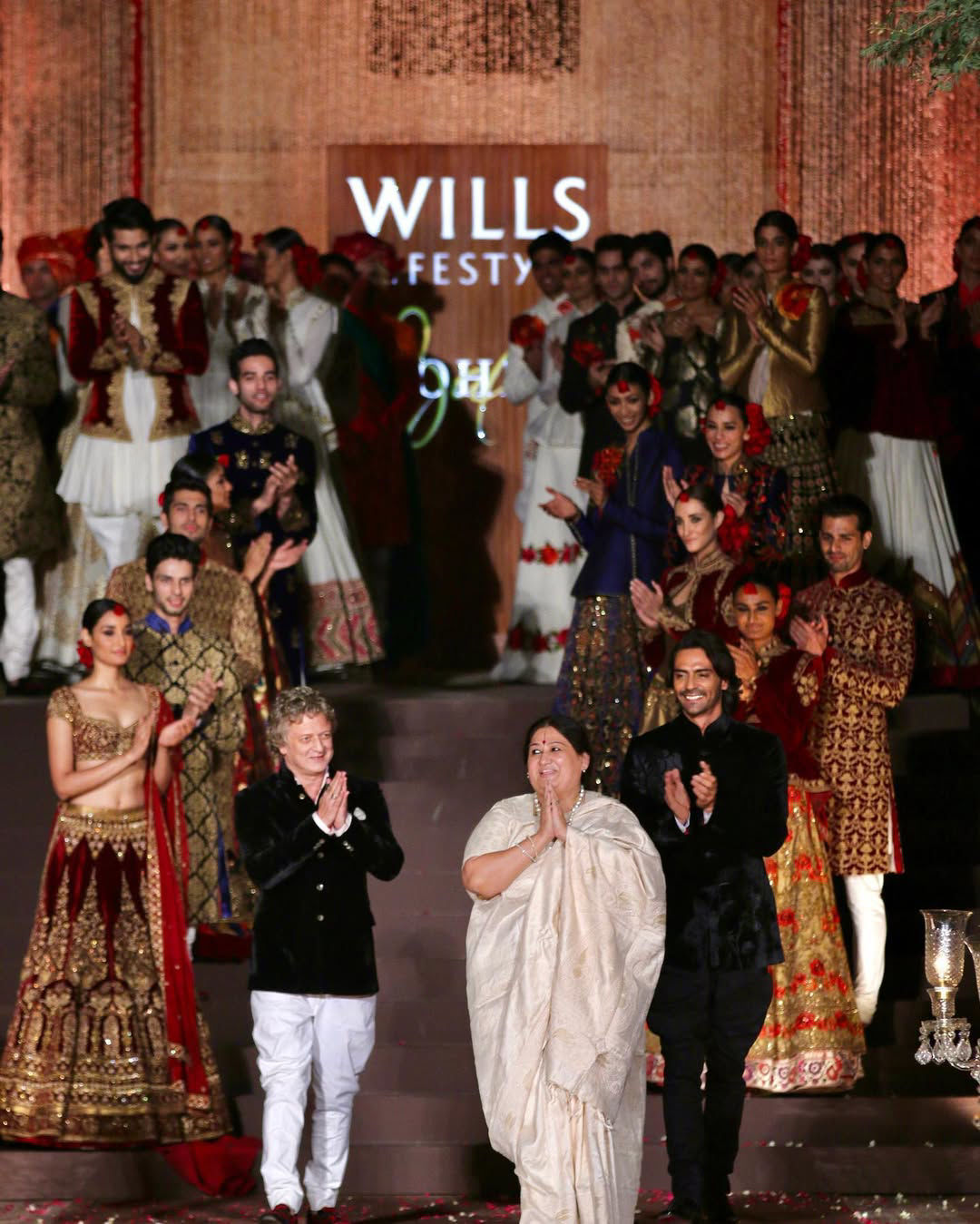
Image Courtesy - Rohit Bal
“I grew up in Kashmir, and Kashmir grew in me. I left Kashmir during my school days but never stopped revisiting that paradise,” Bal told India Today in 2016.
“Whatever I am today, whoever I am, it's all Kashmir. It's ingrained in my genes, so no matter what I do, it will always have a hint of the ethereal valley to it,” he said.
Kashmir remained to be a part of his work, like the pre-pandemic collection Guldastah, which Ivanka Trump wore to a state dinner at Rashtrapati Bhavan in 2020. He was forced to leave the Valley, but Kashmir never left him. The roses, peacocks, and lotuses adorning Bal’s sartorial creations always told a Kashmir tale.
Bal was also credited as the man who invented Page Three in India. Regularly feted by India's A-list that lapped up his creations and invited him to every big do across the country, Bal's clients have included international stars like Uma Thurman, Cindy Crawford, Pamela Anderson, and Naomi Campbell. Supermodel Anna Kournikova even walked the runway for him.
Arjun Rampal (a close friend of Bal who signed my copy of Sengupta’s Indian Fashion in the Rohit Bal section), Sonam Kapoor, Sushmita Sen, Kareena Kapoor, Sidharth Malhotra, Katrina Kaif, and Deepika Padukone all walked as showstoppers for Bal in the past. In a major tables-turned moment, Bal even walked the ramp and turned showstopper for Abhishek Sharma. When once asked the person he would most want to dress, Bal riposted: “Devils and angels. Arjun Rampal, to me, is the perfect male form, and I am myself a cross between the angel and the devil,” Bal added mischievously.
Bal was one of the first Indian designers to gain international recognition. His designs were showcased in top fashion capitals like London, Paris, and New York, introducing Indian fashion to a global audience and paving the way for other Indian designers.
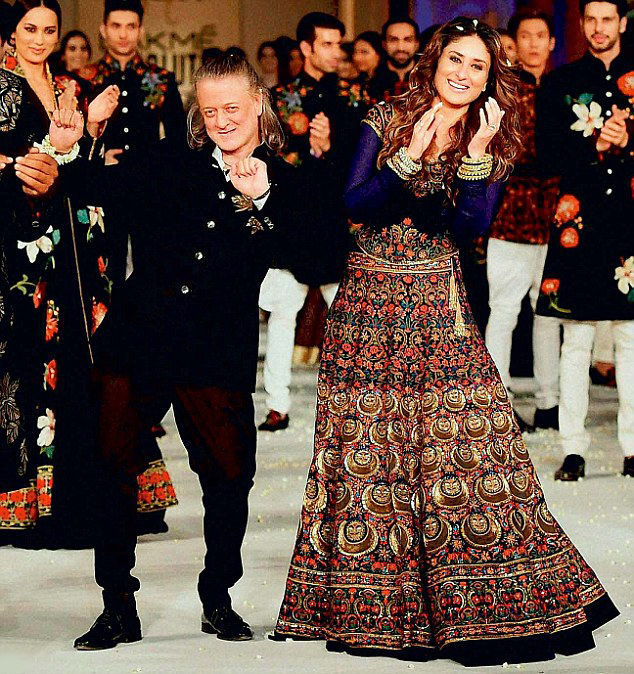
Image Courtesy - Daily Mail
For over three decades, Bal's mastery echoed across the fashion front, inspiring generations of fashion enthusiasts and Indian fashion designers, including notable names like Sabyasachi Mukherjee and Tarun Tahiliani.
“Rohit Bal was a true icon in the fashion industry,” enthused Indian fashion designer Sabyasachi Mukherjee. “His designs inspired me to pursue my passion for fashion,” he added.
Among Bal's myriad achievements and accolades, he was chosen by the Khadi Gram Udyog, the largest handloom textile operation in Panchkula, to work with them as a brand ambassador to bring about a linen revolution in the country.
Bal opened a flagship store in Delhi, as well as stores in Mumbai, Bangalore, Ahmedabad, Kolkata, and Chennai.
He also partnered with Biba Apparels to create Biba by Rohit Bal and developed a children's line called "Bal Bacche," which would be the country's first-ever major designer kids' wear line, keeping Bal's repute of breaking new ground.
He showed a collection inspired by tribal Naga shawls from the northeast of India at Saint Etienne International Design Biennial in France.
On a commercial pop culture excursion, Bal designed costumes for the popular Indian game show Kaun Banega Crorepati.
Bal also ventured into designing jewellery and perfumery with the popular Vana for Women and Silk for Men perfumes. Bal tied up with Indian watch major Titan to start a line of solid gold watches called "Nebula," where the designer created dials shaped like old, gilded mirror frames, and the arms tick on Mughal miniature paintings on the surface. Bal was also a brand ambassador for Omega watches. Bal even lent his name to a 4,000-sq ft discotheque called Decibel, which echoed his exuberant fun-going persona.
Bal's influence extended far beyond the realm of fashion. He designed Sagrados Villas in Goa, and his passion for food and culture led him to establish two restaurants, Veda and Cibo, in Delhi. Both restaurants quickly became favourites among those seeking a unique blend of traditional and contemporary Indian cuisine. Veda, with its rustic charm and innovative menu, showcased the flavours of Mughlai and North Indian cuisine, while Cibo offered a vibrant Italian-Indian fusion experience. Bal often termed cooking and dining as simply an extension of his art, where each dish embodied the creativity he brought into his couture creations.
“Bal's restaurants, Veda and Cibo, were a testament to his love for food and culture. He will be deeply missed,” opined Indian chef and restaurateur Sanjeev Kapoor.Among his prestigious accolades, Bal won 'Designer of the Year' at the Kingfisher Fashion Achievement Awards in 2001. He also won the 'Designer of the Year' award at the Indian Fashion Awards in 2006. He was awarded as the Lakme Grand Finale Designer for 2012. In 2020, he was recognized as "Iconic Fashion Designer of the country" by the jury of the Rajnigandha Pearls India Fashion Awards.
Bal’s last public appearance was during a collaboration show between FDCI and Lakmé Cosmetics, where he showcased Kaaynaat - A Bloom in the Universe, which also drew inspiration from Kashmir. Gen-Z star Ananya Panday closed this last show. The fashion fraternity had teared up and gave ‘Bal’ an emotional standing ovation at the show as he grooved with the models, despite being visibly unwell.
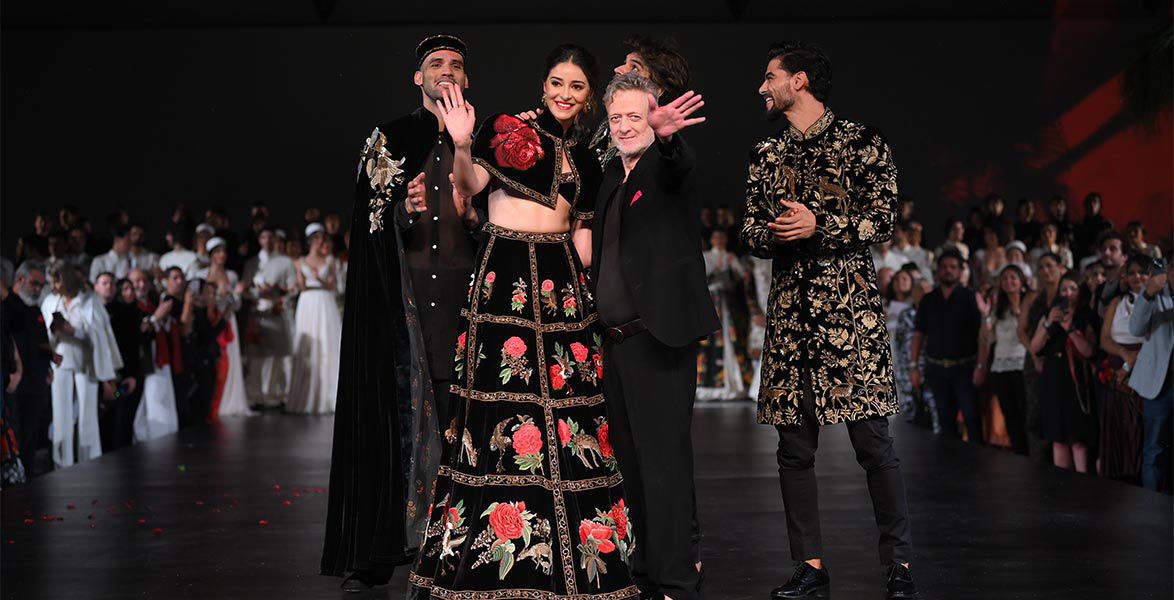
Image Courtesy - Indulge Express
His return to the runway was perhaps a grand goodbye-grand, like his designs, his parties, his fashion shows, and the legacy he leaves behind.
When asked what kind of a fashion designer he was and the best design/business idea that worked, Bal once quipped: “The best kind and everything. I don't think in failure terms.”
That was Rohit Bal - bold, unabashed, carefree, and a spectacular artist who viewed fashion as a fantasy and lived life joyously. There were no half measures in the work of the man who changed the face of Indian fashion. He created like he partied - to the hilt. And unapologetically.
In a world where fashion is a canvas of creativity, Rohit Bal was truly the poster boy and enfant terrible of Indian fashion. But his talent was not just in out-of-the-box thinking and idiosyncratic ideating. His definitive success lay in building a cult brand around himself. What Ritu Kumar did for the reinvention of Indian craftsmanship, Rohit Bal did for fashion brand management. His work and legacy are a lesson on how personalities can be carved into mega brands.
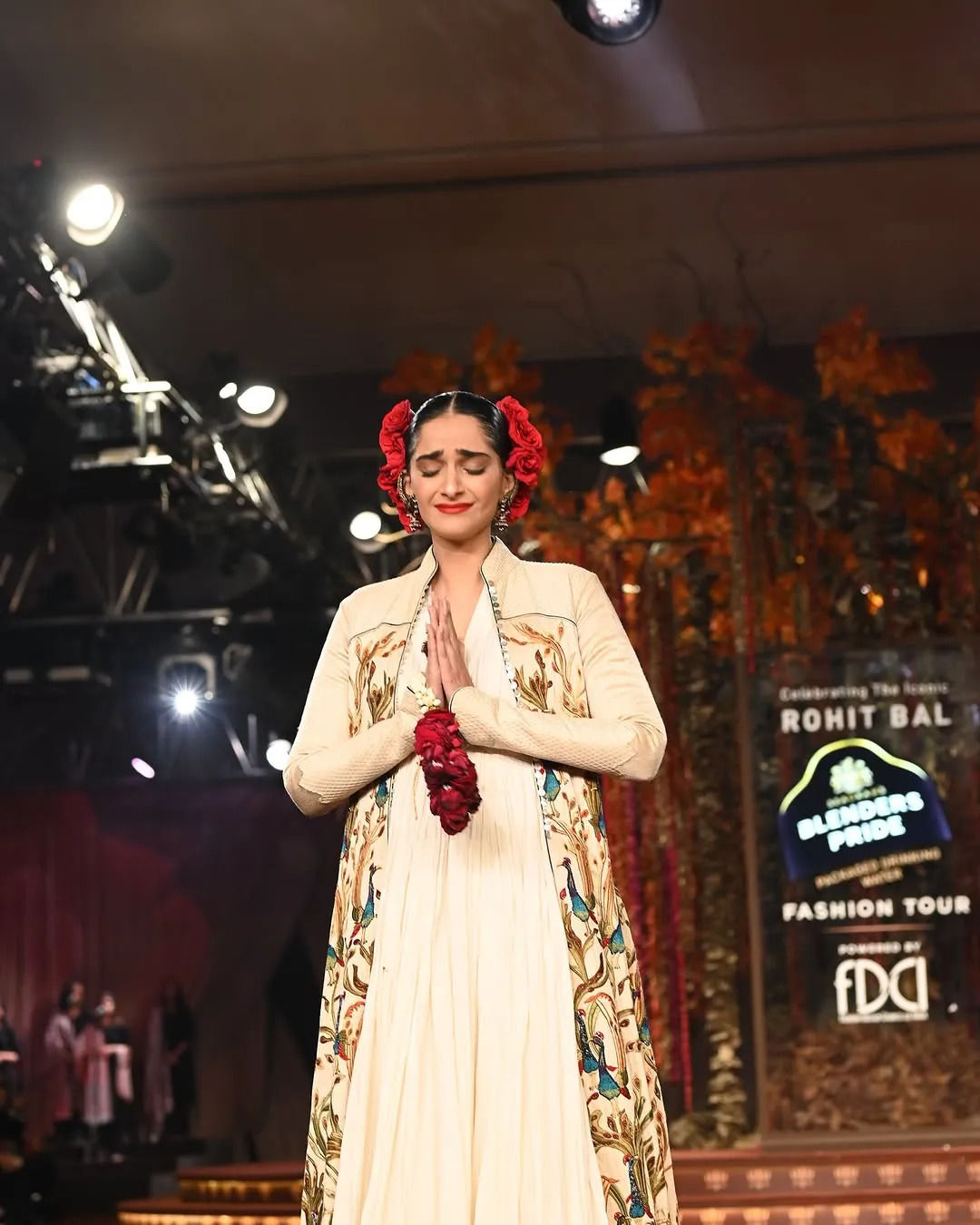
Image Courtesy - Bollyy
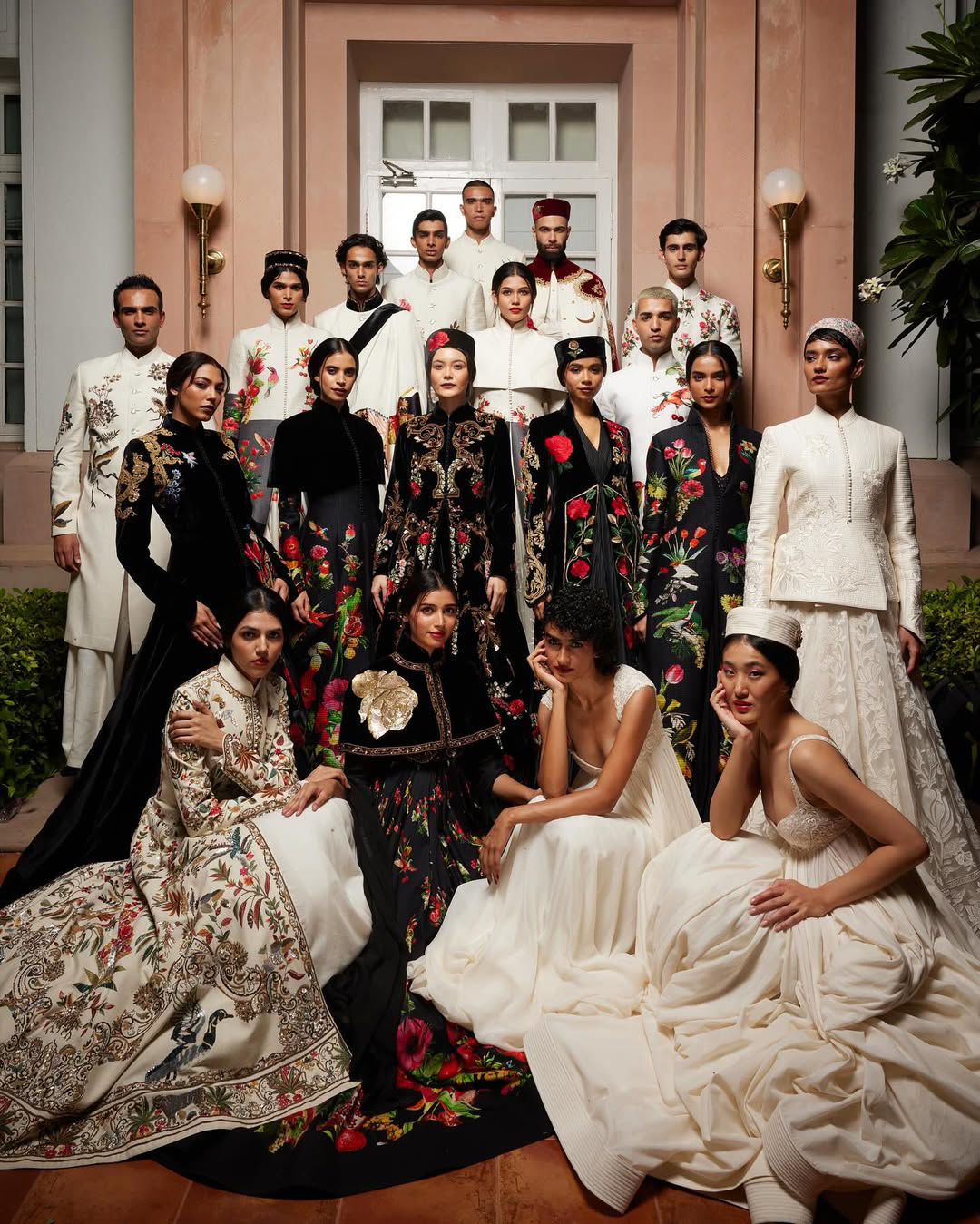
Image Courtesy - Lakme Fashion Week Instagram
Rohit Bal may be gone, but his designs, his restaurants, and his spirit will continue to inspire generations to come. His legacy in the Indian fashion world is unparalleled and will leave an indelible mark on Indian fashion and a void in the industry that will not easily be filled.
Sign up now to get your brand listed on the largest eastern designer wear platform.



Take a screenshot, call/WhatsApp us at
+(971) 56 224 4288
or email at
[email protected]